
What to expect (and why most lodges don’t offer them)
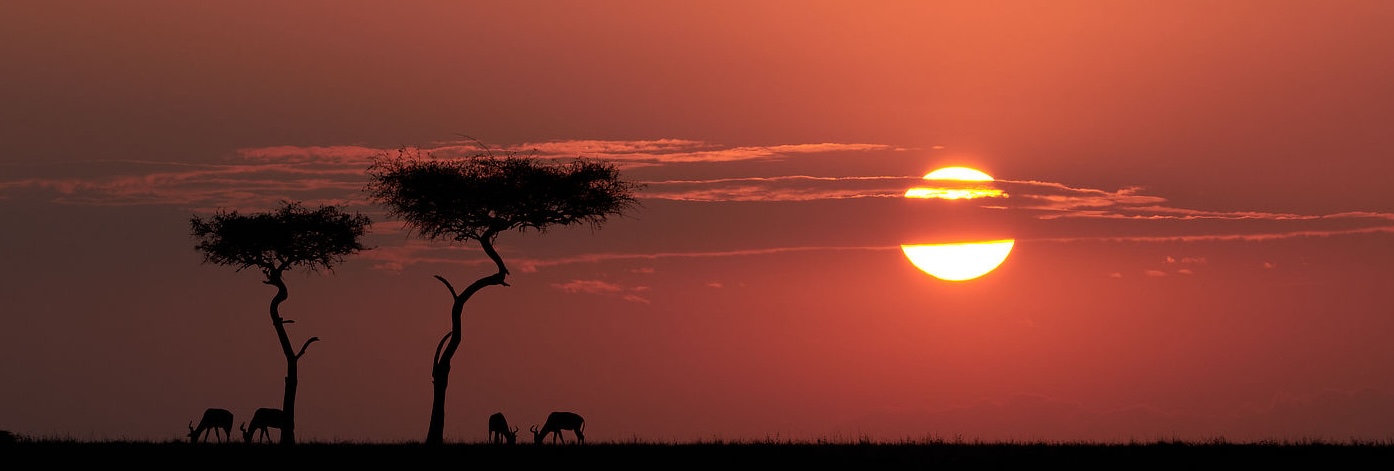
Most visitors to the Maasai Mara see roughly half of what’s actually happening there. The other half happens after dark – and it is, in many ways, the more dramatic half. The Mara at night belongs to a different cast of characters: leopards on the hunt, hyenas moving in clans, lions roaring across the plains, civets and servals and bush babies going about their lives in the dark. The diurnal safari gives you a window onto this world. The nocturnal one opens the door.
The reason most visitors never experience it is simple: night drives are not permitted in the Maasai Mara National Reserve. They are only available in private conservancies, which is one of the (many!) reasons to stay in one.
Why night drives aren’t available in the national reserve
The Maasai Mara National Reserve operates under Kenya Wildlife Service regulations, which prohibit vehicles in the park between 6pm and 6am. The rules exist for legitimate conservation reasons; minimising disturbance to wildlife during the hours when they are most active and most vulnerable. The consequence for visitors, however, is that the nocturnal Mara is entirely off limits.
Private conservancies like Lemek operate under different rules. As community-owned land managed in partnership with local Maasai landowners, conservancies set their own activity guidelines. And most permit night drives, conducted with spotlights, in small groups, with guides who understand how to move through the bush after dark without causing disturbance.
What changes when the sun goes down
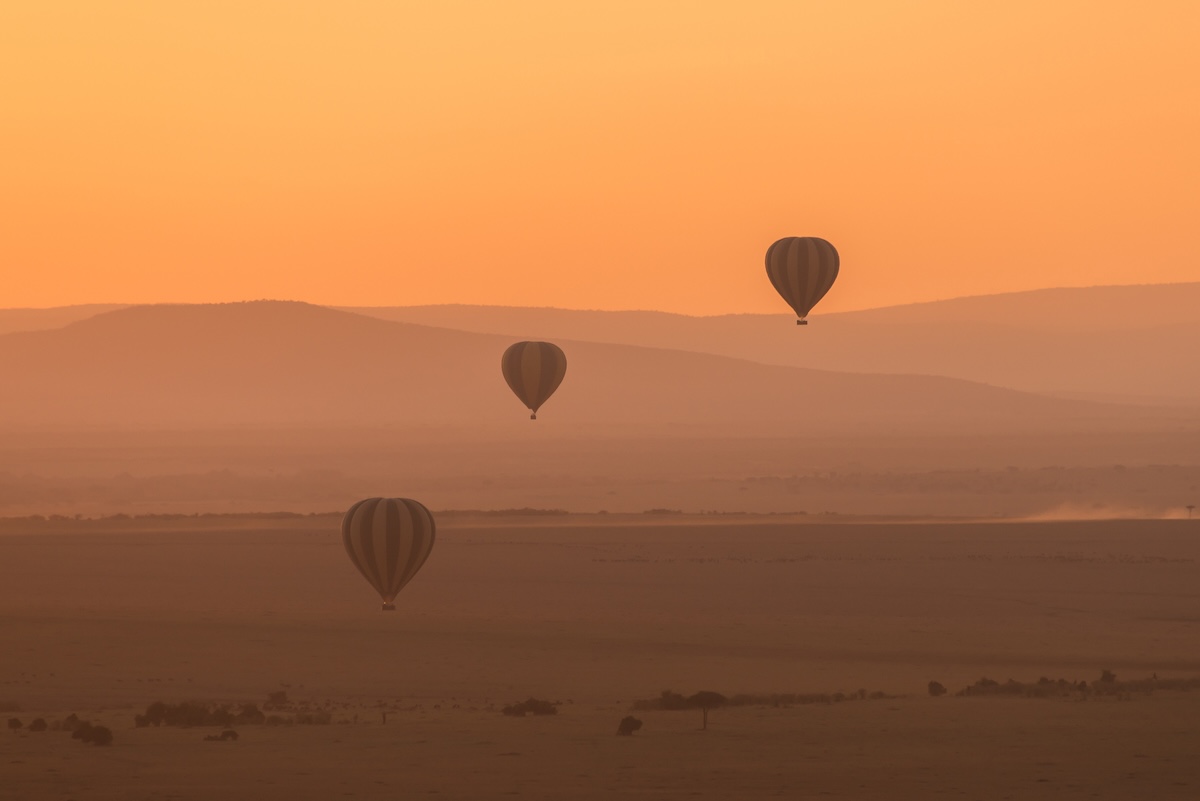
The shift is immediate and total. The plains that looked open and sunlit during the afternoon drive take on a completely different quality after dark. The spotlight picks up pairs of eyes at the edge of its reach. Animals that were invisible during the day (nocturnal species that spend daylight hours hidden) emerge and become visible for the first time.
The sounds change too, and the Mara at night is not quiet. Hyenas whoop and cackle across the conservancy, frogs call from the river, and lions roar – a sound that carries extraordinary distances on the night air and settles in the chest in a way that is difficult to describe.
What you might see on a night drive in Lemek
The headline species are the predators, whose activity increases significantly after dark.
Lions are often more active at night than during the day, particularly when hunting. A pride on the move after sunset is a fundamentally different experience from the same pride resting in the shade at noon. The spotlight reveals them at close range, eyes reflecting gold, moving with a purpose they don’t always show in the heat of the day.
Leopards are perhaps the species that benefits most from night drive access. Genuinely nocturnal, leopards are elusive during daylight hours, but after dark, with a guide who knows their territories, they become a realistic expectation rather than a lucky encounter. Watching a leopard move through the bush at night, completely in its element, is one of the most extraordinary things the Mara has to offer.
Hyenas are a revelation for most visitors. Often dismissed as scavengers, spotted hyenas are in fact highly intelligent, socially complex hunters, and watching a clan at a kill after dark, or following their movements across the conservancy, gives a completely different picture of their role in the ecosystem.
Smaller nocturnal species are one of the particular pleasures of a night drive: serval cats hunting through the grass, civets crossing tracks, bush babies staring wide-eyed from the branches, porcupines and pangolins glimpsed briefly in the light. These are animals that most day visitors to the Mara never see at all.
Birds also shift after dark. Nightjars are frequently seen on tracks, resting until the vehicle is almost upon them. Owls (pearl-spotted owlets, Verreaux’s eagle owls, African scops owls) call from trees and are often visible in the spotlight.
How night drives work at Mattikoko
Night drives in Lemek depart from camp in the last hour of daylight and continue into full darkness. The vehicles are open-sided, and the guide operates a handheld spotlight to illuminate the landscape as you move. The pace is slower than a day drive, and the experience requires a different kind of attention – eyes adjusting to the dark, ears open to sound, senses sharpened by the awareness that you are moving through a landscape that belongs, at this hour, to the animals rather than to you.
Night drives can be arranged as part of your stay at Mattikoko. Simply let us know in advance. They are included in the camp rate and run subject to conditions and guide availability.
What to bring on a night drive
Warm layers are essential! Temperatures drop significantly after sunset, particularly between June and September. A fleece and a windproof jacket are worth packing even in the warmer months.
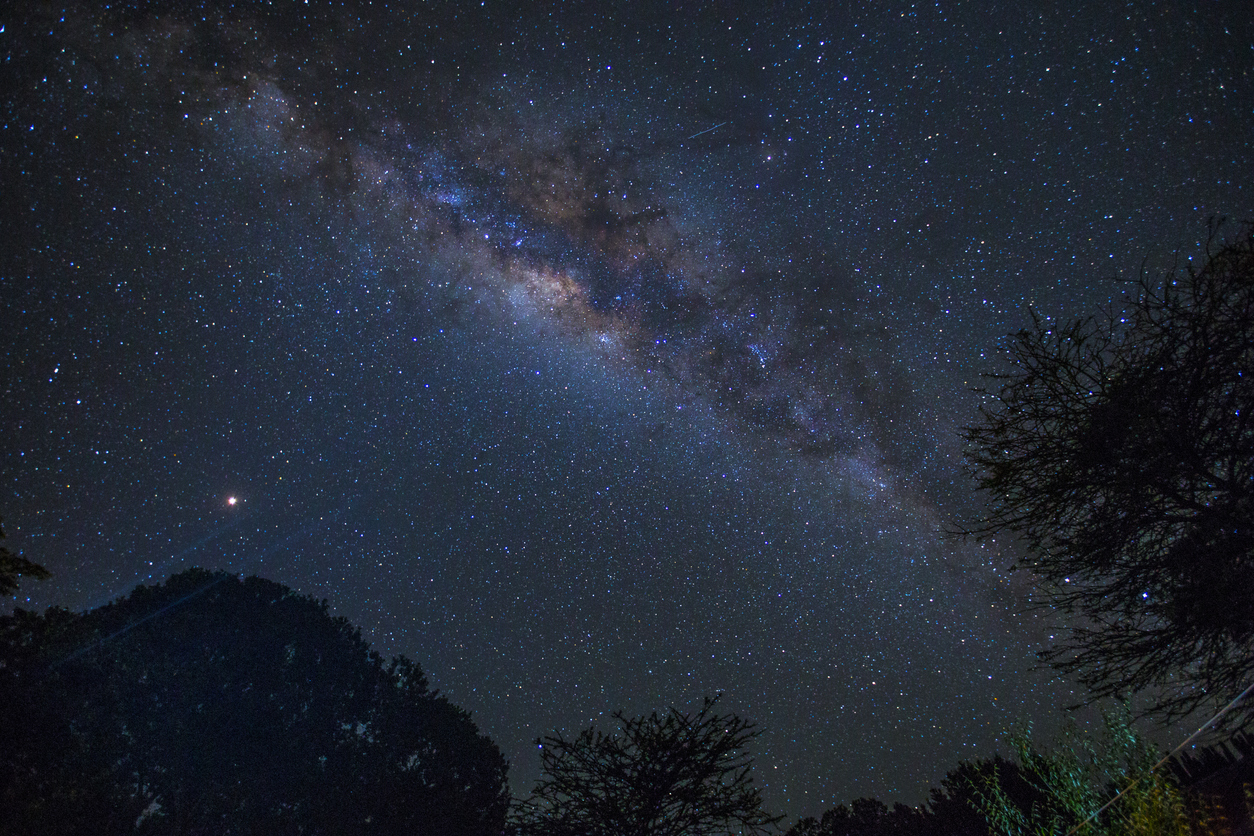
You can bring a phone or camera, but note that spotlighting isn’t allowed (for ethical reasons – it disturbs the animals too much), so taking pictures isn’t much of an option, expect perhaps for astrophotography if you bring a tripod. And you might record some videos for the brilliant sounds of the savannah at night.