
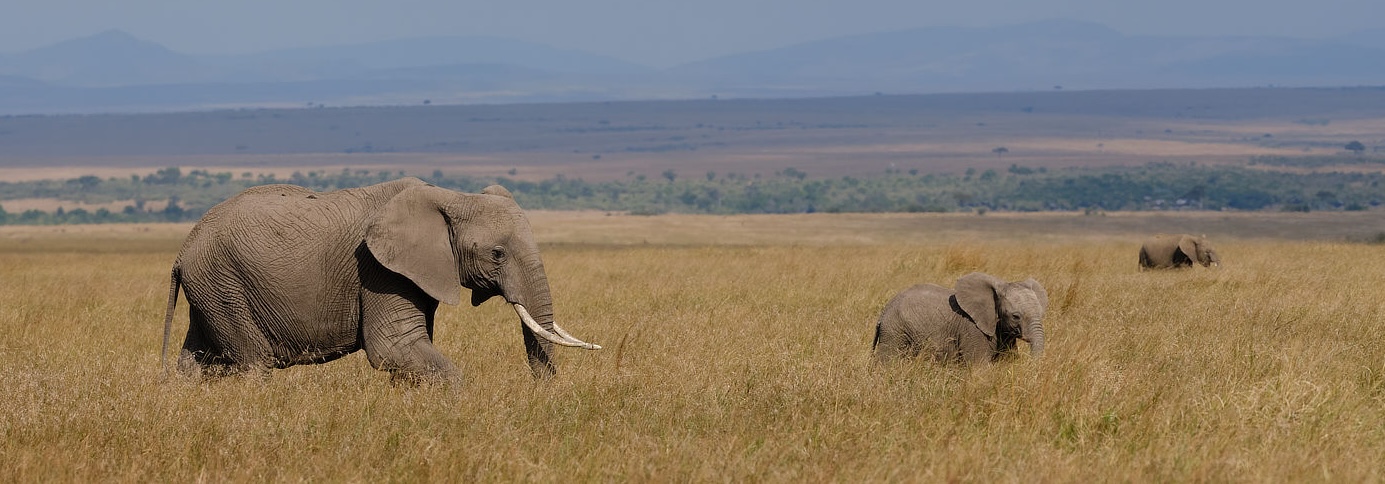
Elaine Berndes describes her experience at Mattikoko
Text & images by Elaine Berndes
I’ve spent the better part of a decade moving in and out of the Mara. Not passing through — but returning. Long enough to build relationships, to spend real time with people on the ground, to move beyond the surface and into something more honest. I’ve seen the Mara in ways most visitors don’t. I’ve understood it as a system — land, livestock, wildlife, community — all held in balance.
And still — this was different.
Titimet, a keeper of Maasai culture
I’ve known Titi for about half that time. I consider him a friend. We’ve shared a lot of laughs (Maasai have a quick wit), gotten stuck and waited to be towed out, had deep conversations that have mattered, and sat in silence — watching the movement on the land, listening for lions in the distance. A familiarity that has always felt real, not transactional. But until March I had never stayed at Mattikoko.
This time, he stepped into the role of host — and through that, I saw both him and the Mara in a far more nuanced way. Mattikoko didn’t introduce me to the Mara. It refined how I understand it.
Titi didn’t host us in the traditional sense. He opened his personal world to us. As a keeper of culture, there’s a depth to how he moves through the land — what he chooses to share, what he doesn’t, how he holds tradition without turning it into something performative. You feel immediately that this isn’t a version of the Mara created for visitors. It’s his. And being invited into it carries weight.
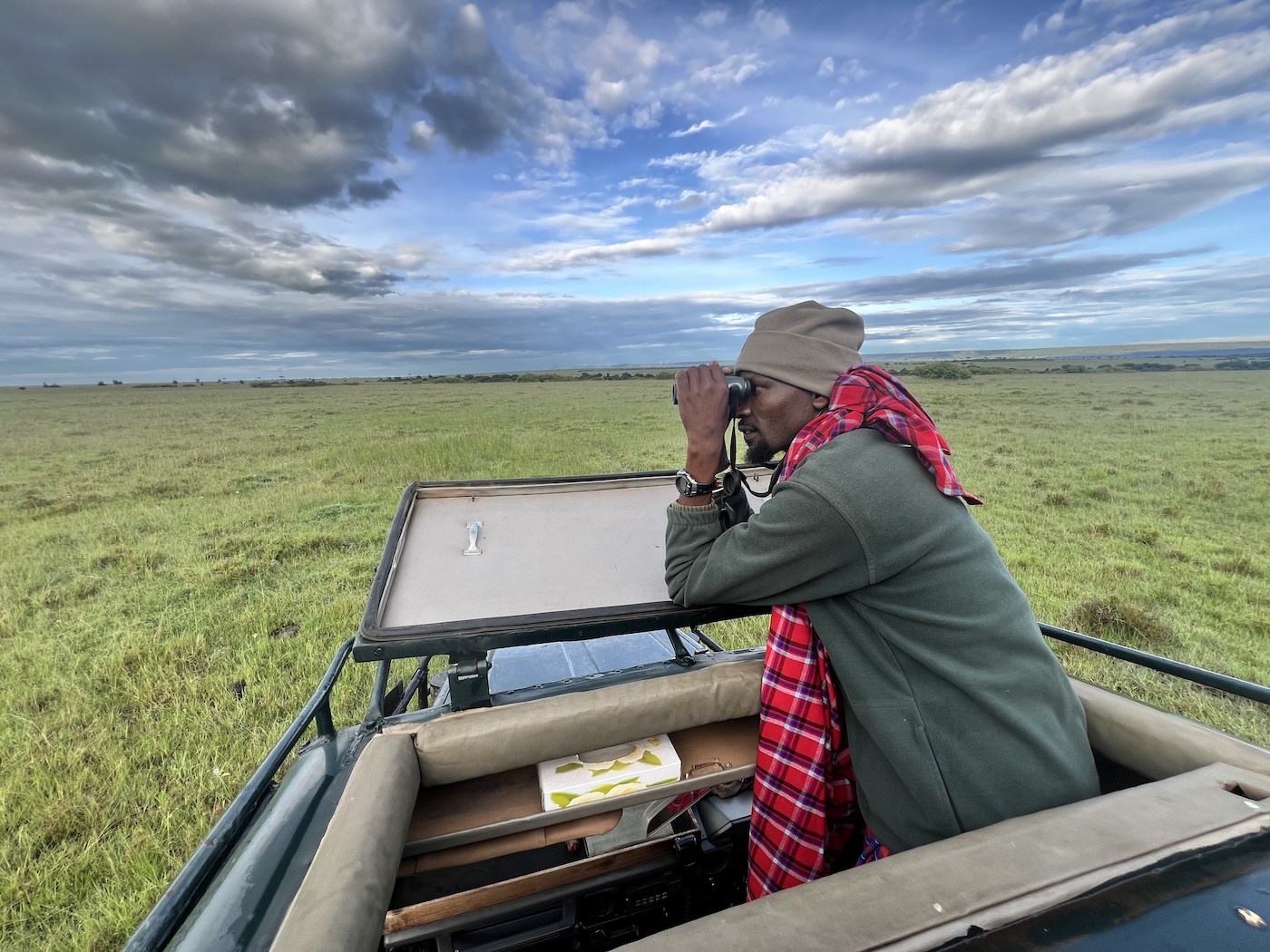
A Maasai-Owned Camp in Lemek Conservancy
Mattikoko sits in a part of the Mara you don’t just stumble into. It’s not that people can’t reach it. It’s that not everyone is looking for it. Farther from the reserve. Off the expected path. The kind of place you choose because you want something different — not more. It’s small. Modest. Maasai-owned. And in an ecosystem filled with camps and lodges, there are only a handful — two, really — where that’s true.
You feel that immediately. There’s space here. The kind that sharpens your attention — to movement, to sound, to what’s actually happening around you.
And being farther from the reserve doesn’t mean less wildlife. If anything, it reveals something people often miss — the Mara is bigger than the renowned national park. The land here is unfenced. Open. Part of the surrounding ecosystem, not separate from it. Wildlife moves through, as it should. You hear it at night. You see it at the edges.
Which is why the askaris matter. They’re not there for show. They read the land. They understand proximity — how close is too close, when to move, when to stay. Titi’s team holds that balance in a way that feels both natural and precise.
This isn’t about chasing wildlife. It’s about being within it.
Mattikoko isn’t trying to be anything other than what it is. There’s a quiet confidence to the place. Nothing is overbuilt. Nothing is trying to impress. But everything is considered. What’s being offered here isn’t scale or spectacle — it’s proximity. To the land. To the people. To a way of life that still holds.
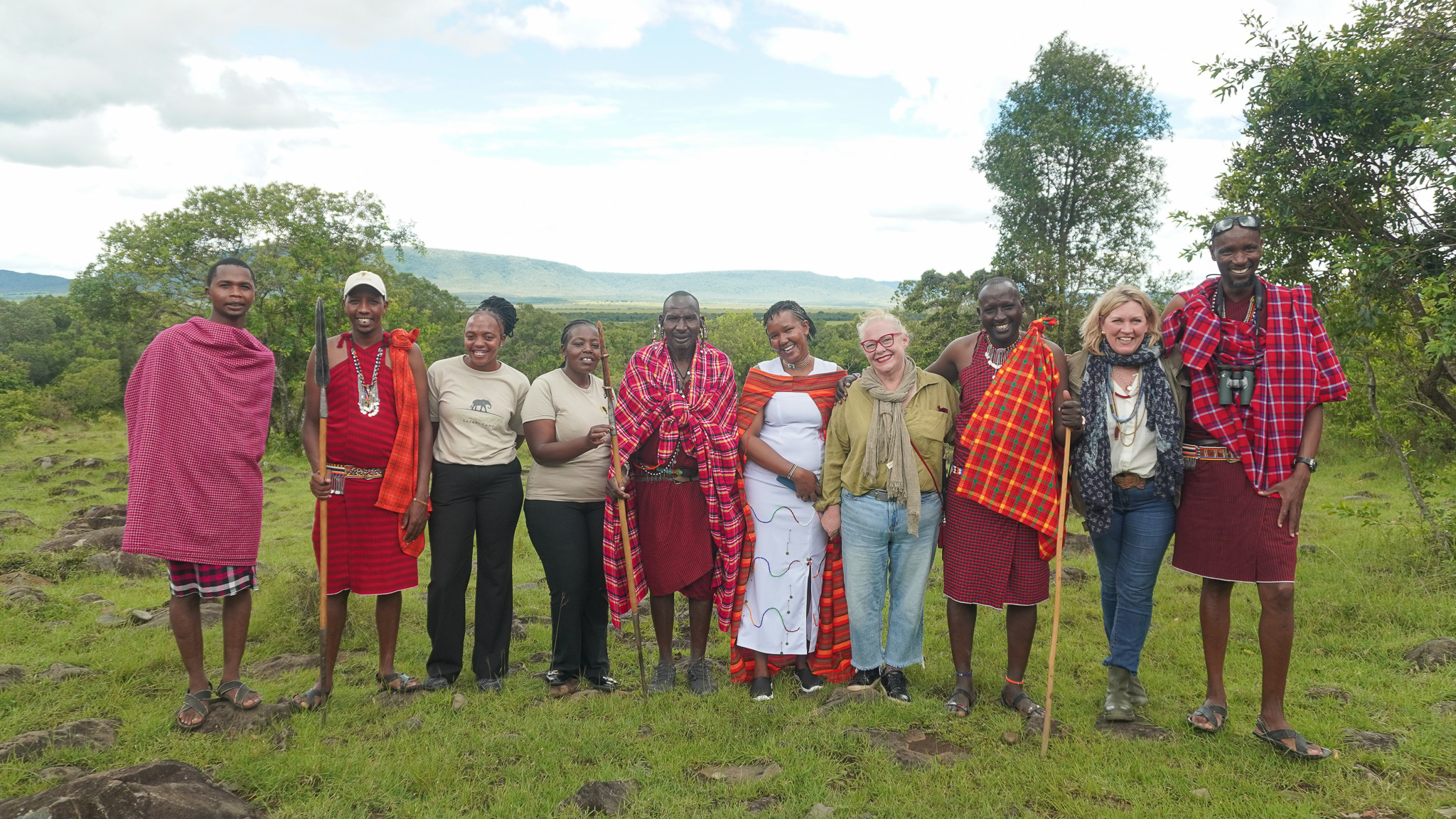
The Team Behind Every Experience
What Titi has built at Mattikoko doesn’t exist without the people around him. You feel that quickly. Not as roles. As presence.
Lesisa is often just ahead of you. Not in a way that draws attention — but in a way that quietly shapes what you’re able to experience. Learning from Titi in real time, watching, listening, adjusting. You can see it — the discipline of becoming. He moves between roles without pause. Spotter. Junior guide. Askari.
Tina is always in motion. Front of house, bartender, everything in between. Anticipating before you ask. Adjusting without making it visible. Drinks appear grounded in what’s around you — not imported ideas, but something tied to place.
Jane moves differently. Quiet. Consistent. Resetting the rhythm behind the scenes. I tend to move quickly — thinking ahead, leaving things behind, already onto the next moment. Jane never let it slip. You return, and everything is as it should be.
And then there’s David. Rain came hard while we were there. Paths disappear. Ground shifts. Movement becomes work. And still — each day, the paths held. Cleared. Safe. It doesn’t look like much when it’s done well. But it’s everything.
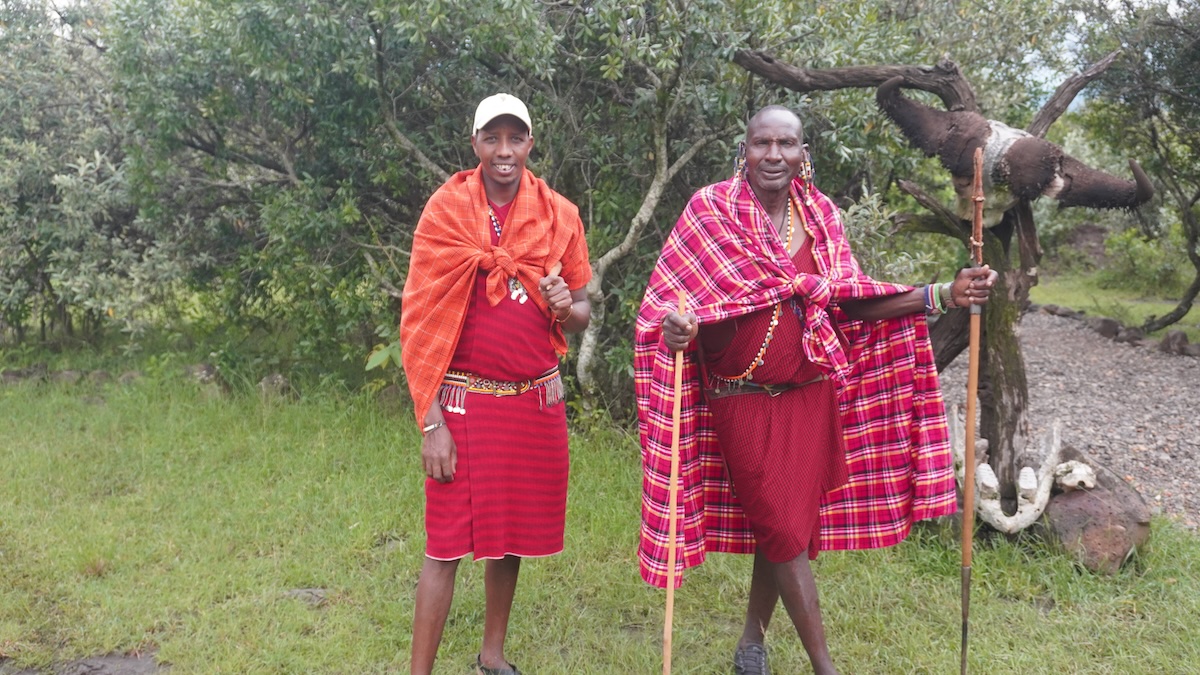
A Maasai Elder, and a Moment You Can’t Plan For
There are moments you don’t plan for. You feel your way into them.
I had heard about Ole Sopia for years. His name carried weight long before I ever found myself in his presence. And even then, it didn’t feel like something you ask for. Titi introduced him simply — “the Kenny Rogers of Kenya.” I smiled, but didn’t immediately put it together. And then I did. This was Ole Sopia Lolgiso.
And with that, a story I had heard years before came back to me. As a young boy, he would chant to his mother’s favourite cow. The cow was difficult — hard to approach, hard to milk. But somehow, through his voice, he calmed it. Befriended it. Made space for his mother to do her work. At the time, it had sounded almost like legend. Something passed along, half believed. Standing there now, it didn’t feel like that at all.
And still — I waited. Two full days. It didn’t feel like something to rush. Or assume. Or take. When I finally asked, it was sheepish. I asked if he might chant. The words felt small as they came out. I wasn’t sure if it was something I should be asking. Or something that would be offered. There was a pause. I sat on edge for a split second, waiting for his response. Then a slight grin. And just like that, the tension lifted. I exhaled.
We stood there together. I took a breath as he took his. And then he began.
The sound doesn’t come at you — it settles in. Low, steady, rhythmic. It carries something with it — stories of cattle, land, lineage. Of movement across terrain, of survival, of belonging. Not as performance, but as memory. As continuity. I sat there, completely still.
Standing there, listening, you’re taken somewhere else entirely. Back to a time well beyond what most of us can comprehend — to generations who stood on that same ground, navigating the same land, living within the same rhythms. There’s no translation needed. In fact, it wouldn’t help. You’re not meant to understand it in a conventional way. You’re meant to witness it.
I glanced over at Titi. He was right there with us — fully in it. As mesmerised as we were. No separation, just a shared stillness and a shared sense that what we were witnessing mattered. Titi carries a level of respect among elders that isn’t spoken about — it’s understood. It’s built over time, through how you show up, what you protect, what you represent. That respect is what made this moment possible in the first place. He, more than anyone, knew what we were being allowed into.
The chant continued. And without thinking, we fell into it — Titi, Kori, and I. A subtle rhythm. Swaying. Rocking, the way the Maasai do. Not learned. Not instructed. Just joining.
It shifted something. Not dramatic. Not overwhelming. Just a quiet recognition that we had been allowed into something that didn’t need us — but made space for us anyway.
The Food at Mattikoko
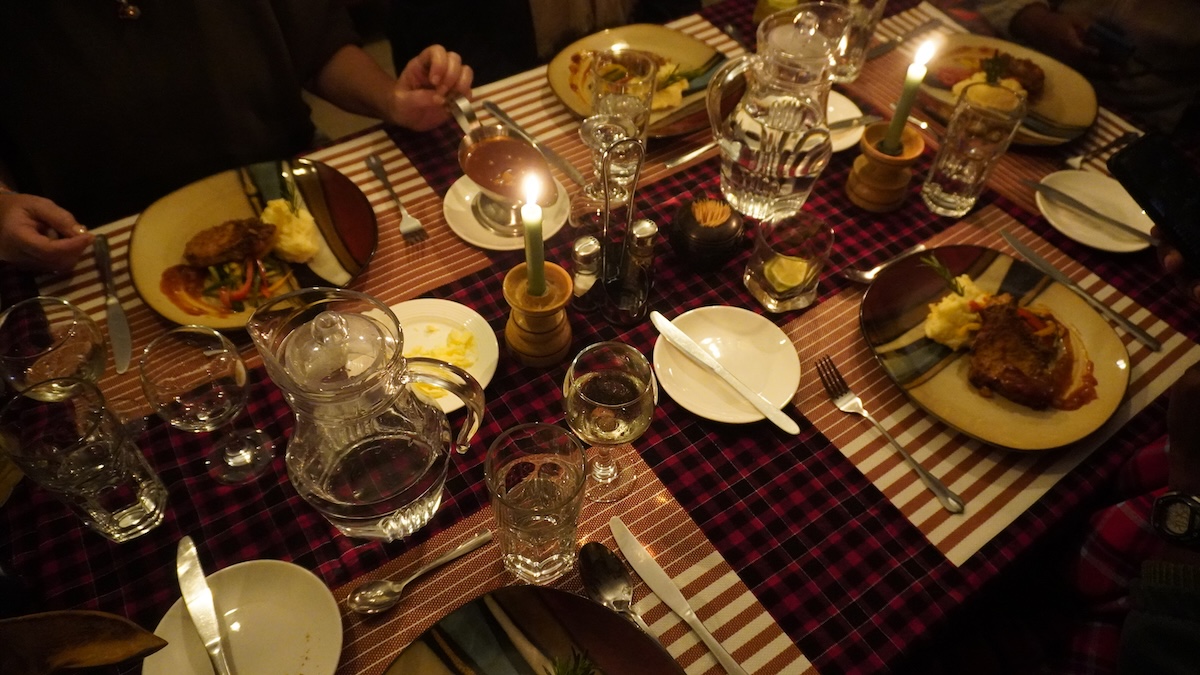
There’s a depth to what’s happening at Mattikoko that you don’t expect. Not because it’s hidden — but because it’s so unassuming. The kitchen sits quietly within the camp. Modest. Clean. Alive in a way that doesn’t need to announce itself. You could walk past it without realizing what’s coming out of it. And then you taste.
Raphael. Beverly. James.
There’s range here that doesn’t fit neatly into categories. One moment, you’re standing over fire — goat turning slowly on wooden stakes, cut and worked on tree branch boards, everything guided by instinct and repetition. Not measured, not explained. Just known. And then it shifts. Breads that don’t make sense in the best way — texture, depth, something you can’t quite place but immediately want more of. Greens layered with flavour that feel both familiar and completely new. Desserts that aren’t trying to impress, but do anyway.
It’s simple food — in the best sense of the word. Not overdone. Not trying too hard. Nothing unnecessary. But not simple in the way people often mean it. There’s a difference between simplicity before you understand something — and simplicity that comes after you’ve gone deep enough to strip everything back to what actually matters. That’s what this is. The kind of simplicity that’s earned.
There’s a quote I’ve always come back to: “For the simplicity on this side of complexity, I wouldn’t give you a fig. But for the simplicity on the other side of complexity, for that I would give you anything I have.”
That’s what’s happening here.
Titi and I arrived early to breakfast one morning — recapping the day before, setting a course for what was ahead. We’re not there simply for the wildlife. We’re there because of Titi. We’re there to explore the unsung food of the region. And in those few quiet moments before everyone else arrived, we meant to sample a crepe. Just one. And then someone ate nearly half the serving plate. By the time the others joined, Beverly was already moving — whipping up another batch in minutes, quietly covering for us. No one needed to say anything.
It’s not traditional or modern. It’s both. And neither. It’s continuity. There’s a joy in the way they cook. But more than that, there’s conviction. Nothing feels borrowed. Nothing feels performed. It’s connected — to land, to memory, to Maasai heritage — but expressed with a confidence that allows it to evolve without losing itself. And it’s happening right there. In that small kitchen. In that corner of the Mara. No spotlight. No noise. Just work that speaks for itself.
The Camp That Insiders Choose
It’s the kind of place where, if you know, you know.
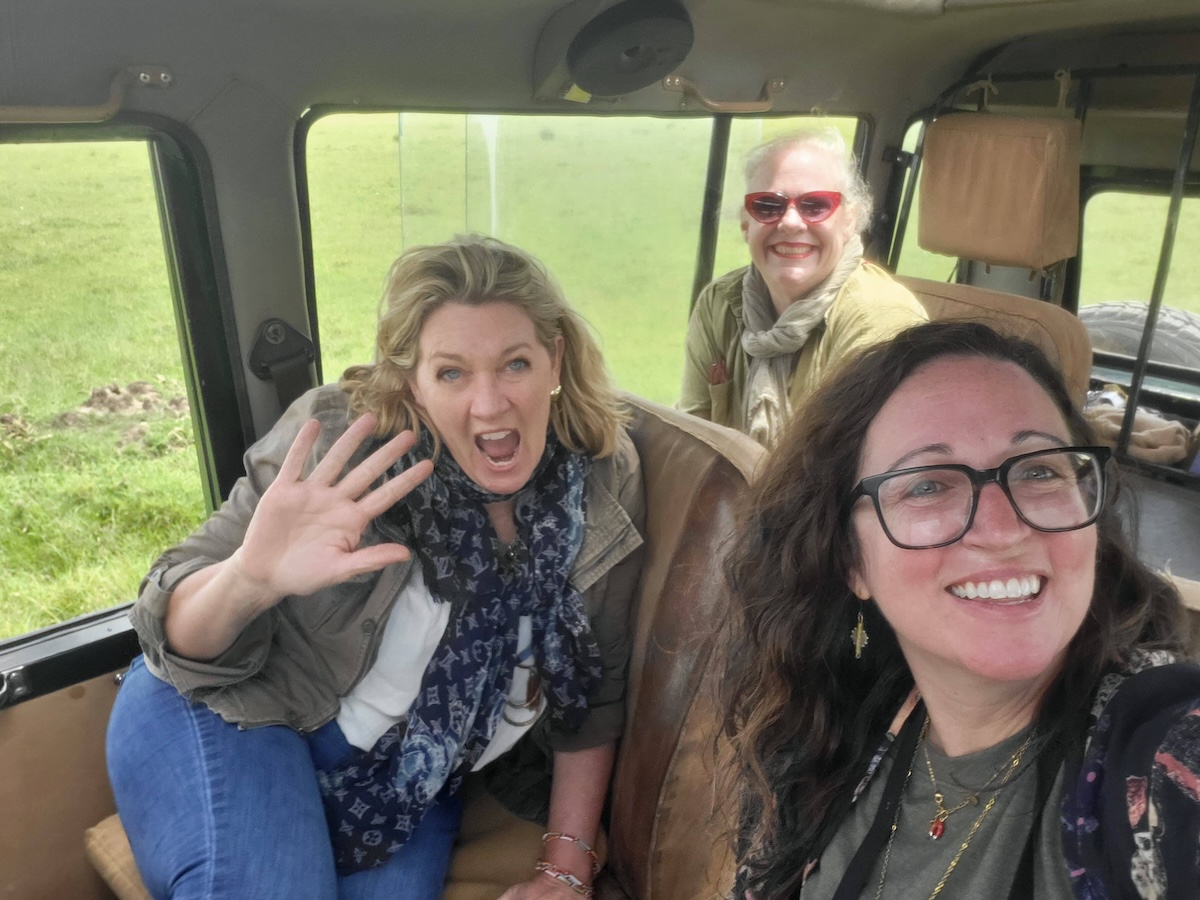
And then there are the signals. The kind you don’t advertise. People who know the Mara — really know it — find their way here. I won’t name names. But I will say this: someone closely tied to what many would consider the most high-end lodge in the Mara ends every trip here.
That should tell you something.