
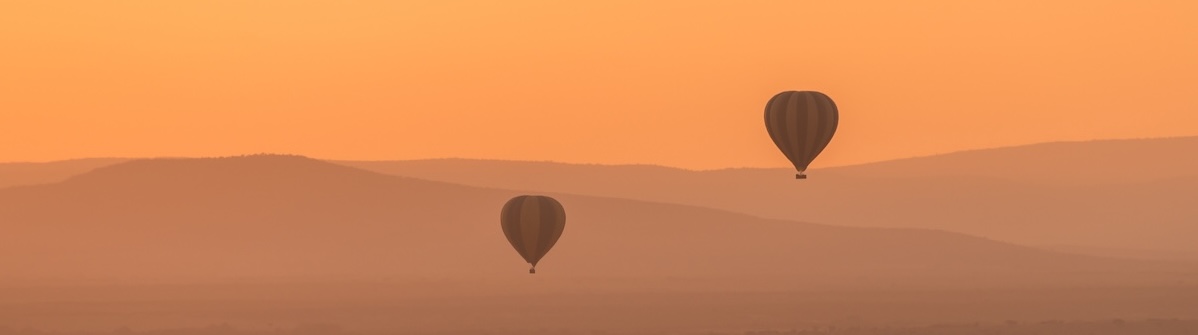
Soaring above the savannah
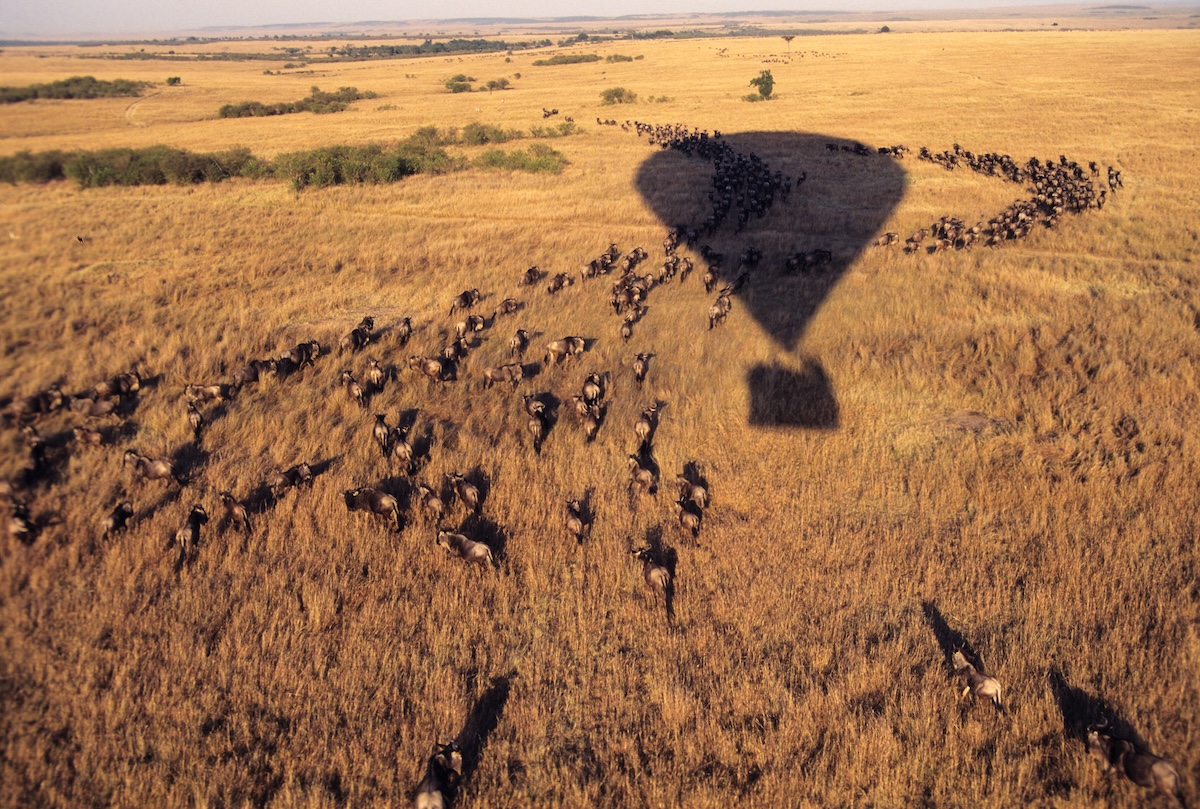
There are two ways to see the Maasai Mara. From the ground, at eye level with the grass, and from above, the plains laid out beneath you, the river catching the first light, a thousand wildebeest moving in a pattern that’s impossible to read from the ground but makes complete sense from the air. A hot air balloon safari is not a replacement for a game drive. It’s a completely different experience of the same landscape – and one that’s worthwhile embarking on.
What actually happens
Balloon safaris launch at dawn, which means an early start – typically 4.30 to 5 am, depending on the season. You’ll be transferred from Mattikoko to the launch site while it’s still dark, arriving to find the balloon being inflated in the half-light. There is something quietly extraordinary about that moment; the scale of the balloon, the hiss of the burners, the first pale light beginning to show above the escarpment.
Flights last approximately one hour, drifting with the wind across the ecosystem. The direction and distance covered varies each day depending on the wind, and no two flights follow exactly the same path, which is part of what makes the experience feel genuinely alive rather than choreographed.
You will typically float over open grassland, the Mara River, and – during migration season – the vast herds moving below. The altitude varies too: pilots bring the balloon low over the river or the plains for close perspectives, then climb to let passengers take in the panoramic scale of the ecosystem.
The flight ends with a champagne breakfast in the bush, served wherever the balloon lands. You’ll be driven back to camp in time for a late morning game drive.
What you see from the air
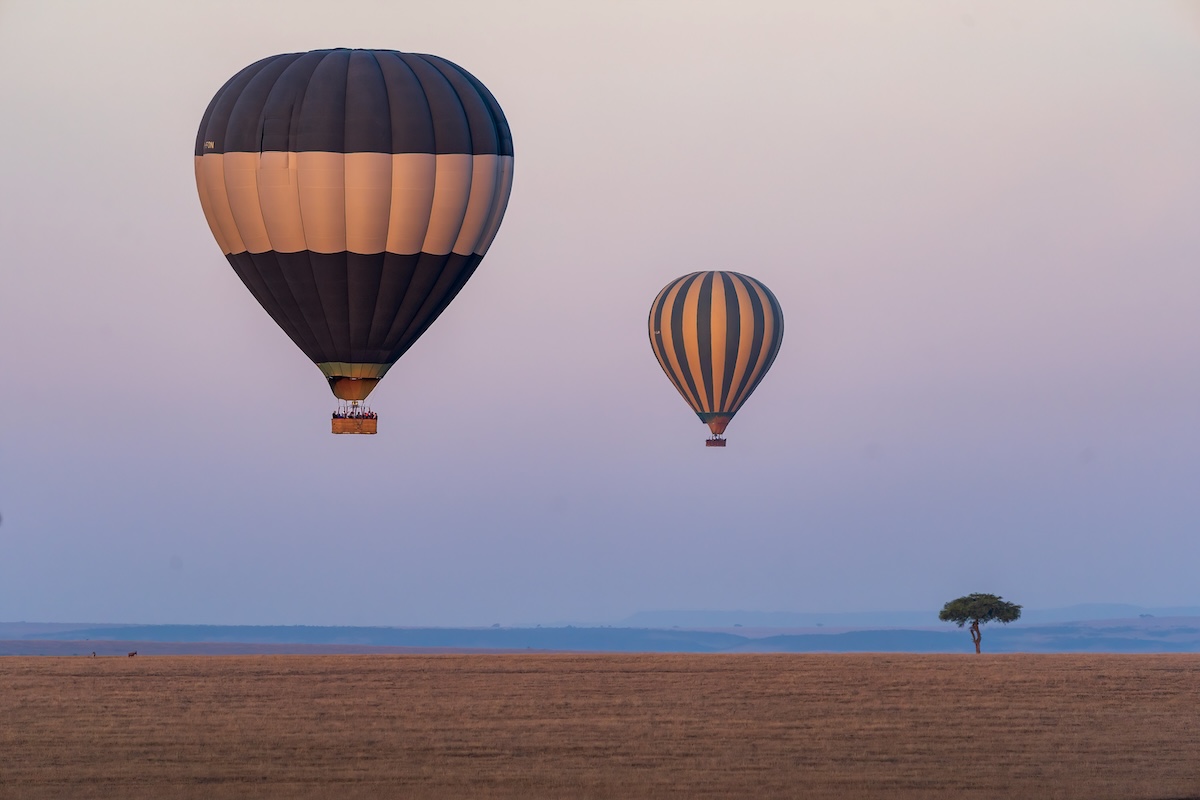
The Mara from above is a different Mara. The first thing you’ll notice is the scale; the plains stretch further than any ground-level vantage point can suggest, and the river systems that thread through the ecosystem become visible as a whole rather than as isolated sections glimpsed through trees.
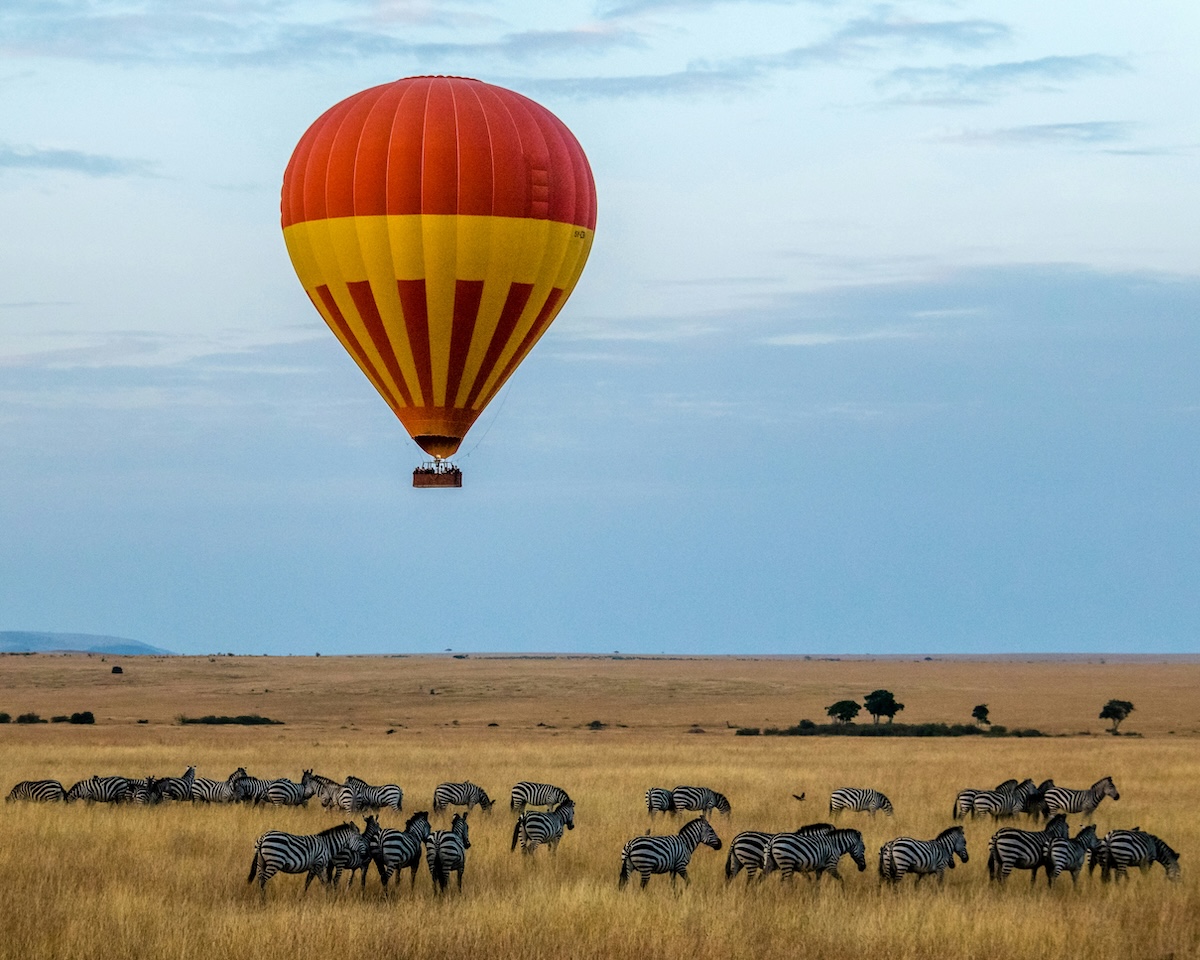
Wildlife is visible throughout. Herds of wildebeest, zebra, and gazelle are easy to spot from height, as their movement patterns become legible in a way they aren’t from a vehicle. Elephant families cast long shadows in the early morning light. Buffalo herds show up as dark shapes on the grassland. Hippos are visible in the river pools below.
For photographers, the light at this hour is exceptional. The low angle of early morning sun across the plains, combined with the silence and stability of floating creates conditions that are genuinely difficult to replicate elsewhere.
Practical notes
Timing: Balloon safaris run year-round, but migration season (July–October) adds the extraordinary spectacle of the herds from above. Dawn game drives during migration can also be exceptional, so consider your priorities when planning which morning to allocate to the balloon.
Booking: Spaces are limited and fill quickly during peak season. We recommend booking your balloon safari before you arrive, not after. Let us know when you enquire about the camp and we’ll coordinate it as part of your stay.
Fitness: Passengers need to be able to climb into and stand in the basket for the duration of the flight. The basket has no seats, so you’ll be standing throughout. Most people find this straightforward; if you have concerns about mobility or fitness, let us know.
Weather: Flights operate subject to weather conditions. Cancellations are rare but do happen, and are always prioritised for guest safety. If your flight is cancelled, we’ll work with you to find an alternative date if your schedule allows.
Children: Minimum age for balloon safaris is typically seven years old. For family guests, it’s worth discussing in advance. For the right child it can be extraordinary, and for others the early start and hour-long standing may be a stretch.
Combining the balloon with your stay
The balloon works best as one element of a broader Mattikoko experience, not as the whole of it. A typical approach is to dedicate one early morning to the balloon and spend the remaining game drive mornings and evenings in Lemek, which gives you both the aerial perspective and the close, unhurried game viewing that makes this conservancy so good.
Get in touch to arrange your balloon safari →
Further reading: