
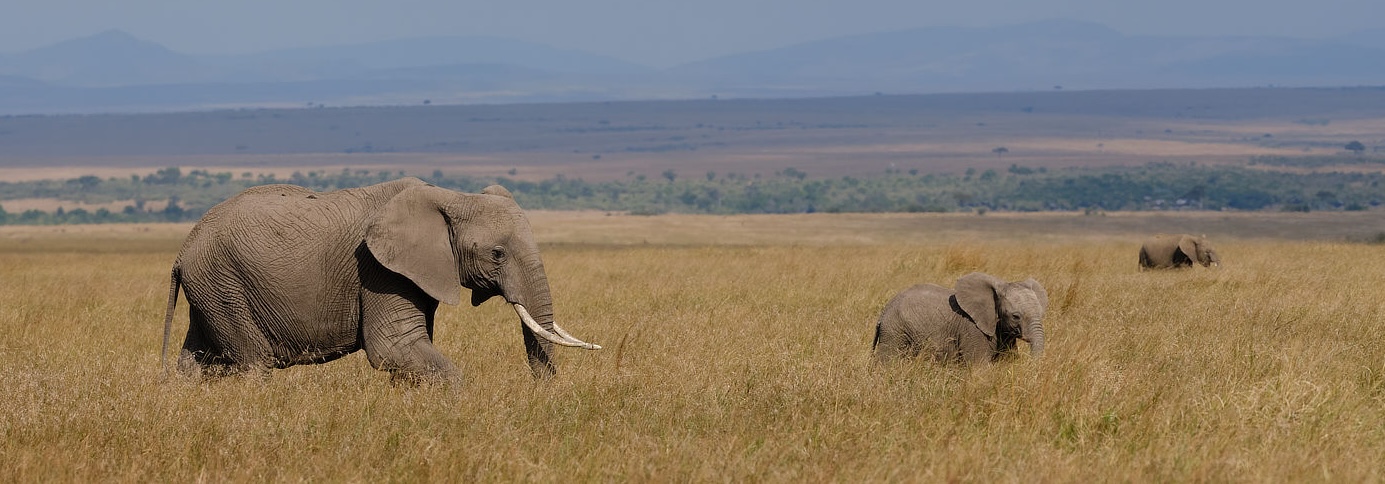
What to expect when you leave the vehicle behind
Most people picture a safari from the seat of a vehicle. The open roof, the binoculars, the engine idling while a pride of lions passes twenty metres away. That version of a safari is extraordinary – and at Mattikoko, it’s the heart of what we offer. But there is another way to experience the bush that most visitors never try, and almost everyone who does says it changes something about how they see wild places. Here’s what you can expect from walking safaris in Lemek Conservancy.
Why walking changes everything
A vehicle is a remarkable thing in the bush. Animals are largely habituated to it; they don’t see it as a threat, which is why you can sit within touching distance of a grazing elephant without disturbing it. But a vehicle also creates distance, a frame around the experience, a separation between you and the ecosystem you’ve come to see.
On foot, that separation disappears. Your senses recalibrate immediately. You start to hear things – the specific alarm call of a yellow-necked spur fowl that tells an experienced guide a predator is somewhere in the tree line; the low, constant hum of the savanna that you simply don’t register from inside a car. You start to smell things – the dry dust, the particular scent of a waterhole, the sharp tang of wild sage crushed underfoot. You become, very quickly, more alert and more present than you’ve been in a long time.
The scale of the landscape also changes on foot. The Mara feels vast from a vehicle, but it feels genuinely immense when you’re standing in it. That sense of being small inside something very large and very alive is one of the things people remember most.
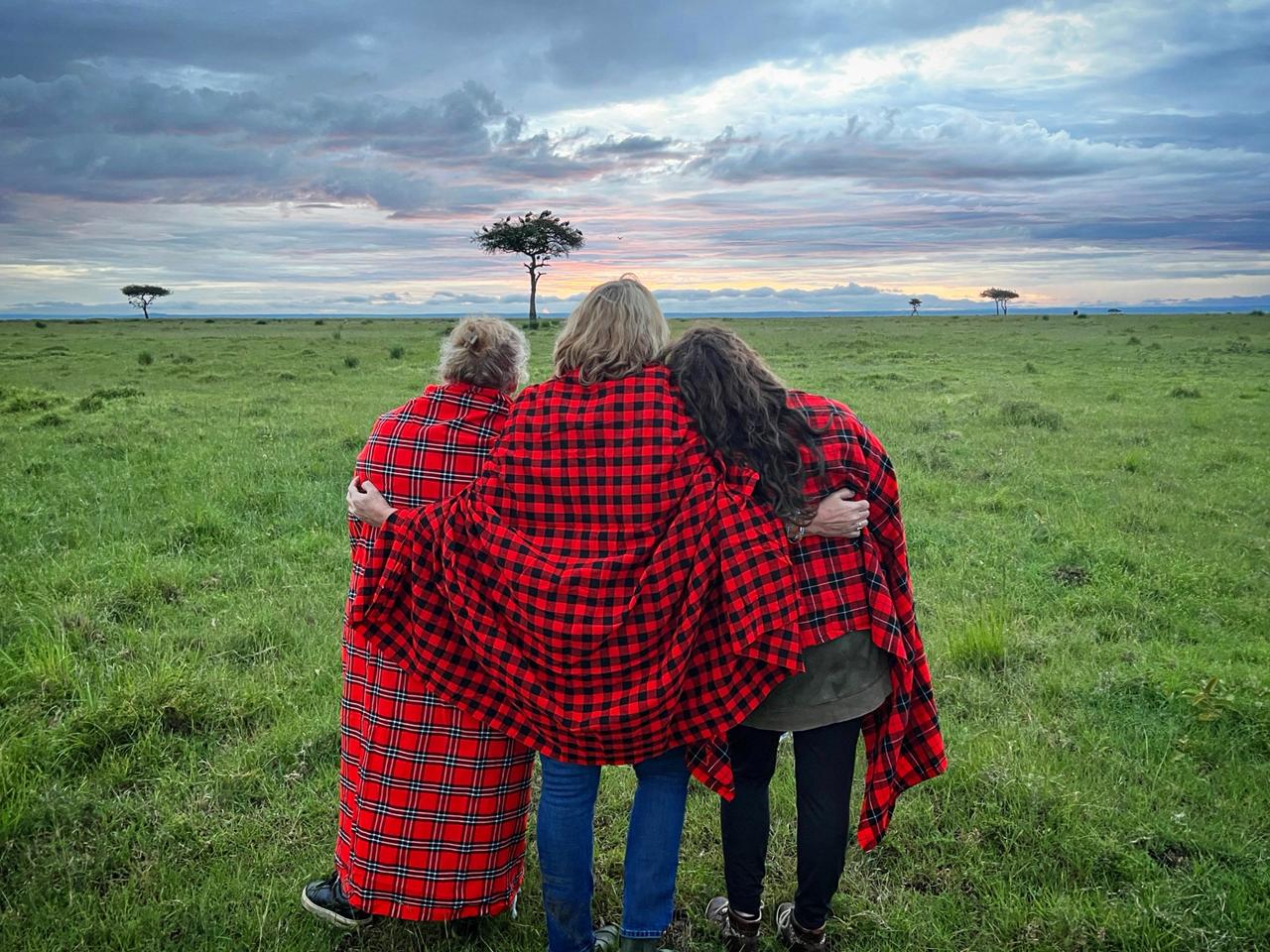
What you actually see on a walking safari
Walking safaris are not game drives with the roof taken off. The wildlife you encounter is different, and the way you encounter it is different. The smaller details of the bush come into focus. Animal tracks pressed into the soil become readable text once a guide has shown you how to interpret them, like the splayed print of a hyena, the neat round pad of a leopard, or the surprisingly delicate impression left by an elephant. Termite mounds, which you’d drive past without a second glance, turn out to be extraordinary architectural structures that shape the entire micro-ecology around them. Plants that look anonymous from a vehicle reveal specific identities: this one is used by the Maasai to treat fever, that one marks the edge of a territorial boundary used by lions.
You also encounter the smaller animals that a game drive tends to overlook, like dwarf mongooses moving through rocky outcrops, dung beetles doing their improbable work, the extraordinary variety of birds that are only properly visible when you’re still and quiet enough to let them come to you.
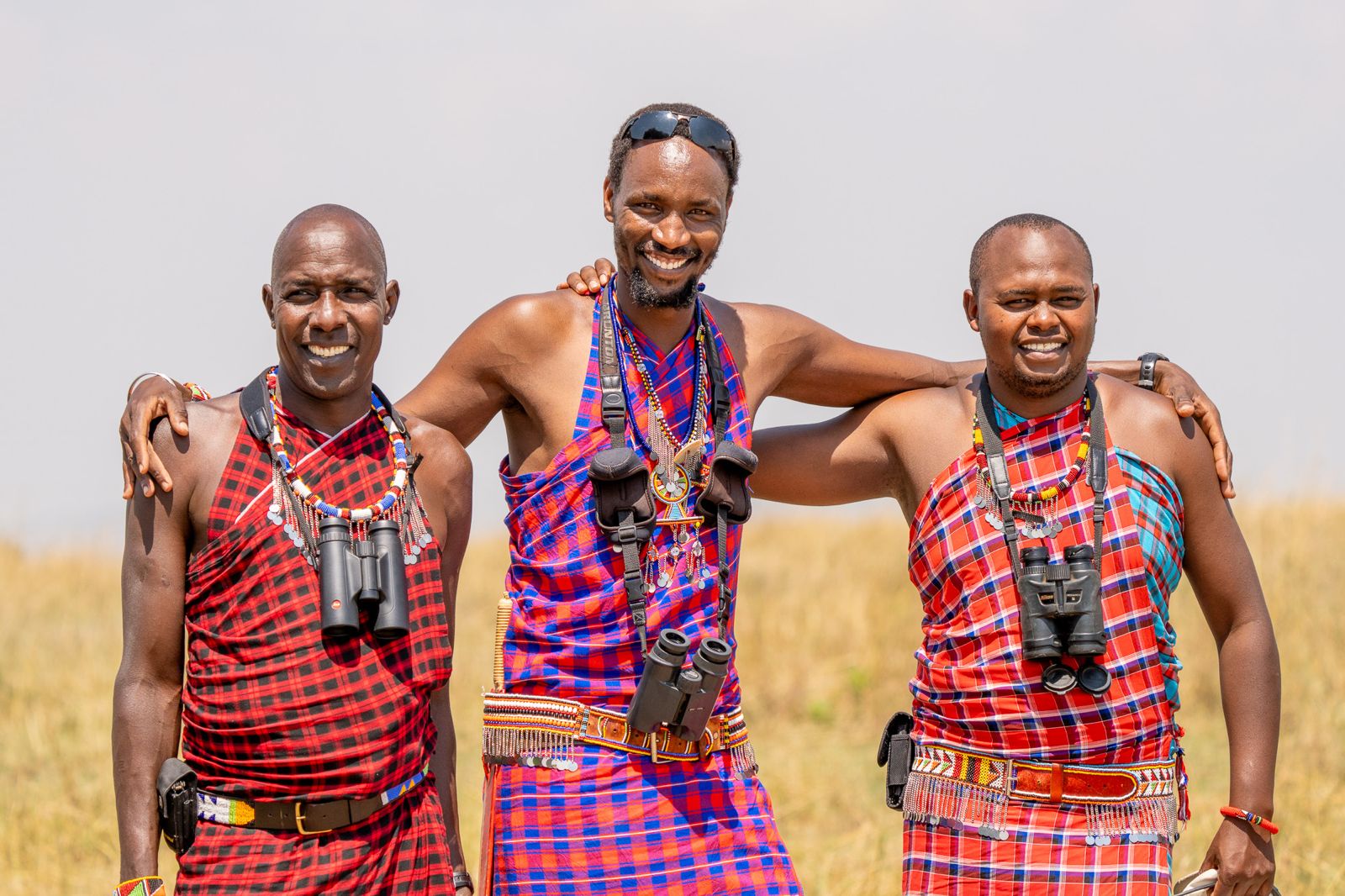
Larger animals are encountered too, often more closely than you might expect, because on foot your guide controls the approach with a precision and patience that isn’t possible from a vehicle. The protocols are clear: Titimet and our other guides have walked this landscape for decades, and they read animal behaviour with the kind of authority that comes from a lifetime of genuine experience, not textbook study. You are in careful, expert hands.
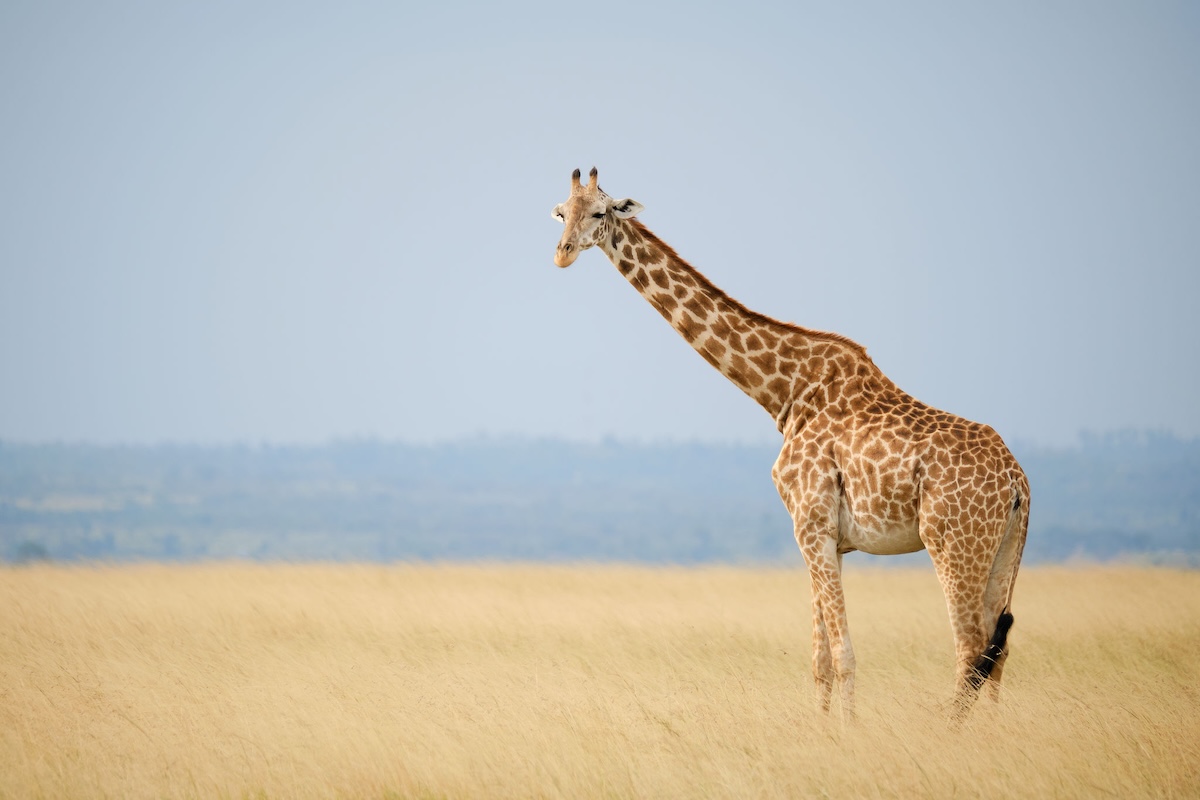
Titimet’s knowledge of the ground
Walking safaris at Mattikoko are led by Titbit and our other experts guides who grew up in this conservancy and have been tracking animals across it since long before they were professional guides.
Titimet’s formal qualifications are exceptional by any measure, as he’s one of only 22 Gold Standard safari guides in Kenya, a level that takes a minimum of six years of progressive examination and active field experience to reach, and that most guides who attempt never attain. But the knowledge that makes a walking safari with Titimet extraordinary predates all of that.
He grew up near Aitong, walking twelve kilometres to school and back through bush that was never empty of wildlife. His father taught him to track animals and read their behaviour – skills passed down through generations of Maasai pastoralism, developed over centuries of living alongside some of the most dangerous animals on earth. By the time he entered formal guide training, he already knew this landscape in a way that cannot be taught in any classroom.
In addition to his KPSGA Gold Standard certification, Titimet holds a Field Guides Association of Southern Africa Level Two Arts of Tracking qualification, earned through study in South Africa’s Kruger Makuleke area and in Botswana, one of the most rigorous tracking qualifications available anywhere in Africa. It is a specialism that focuses on exactly the skills that make a walking safari exceptional: reading the ground, following movement through landscape, understanding what the earth tells you about what has passed through it and when. On a walking safari, all of that knowledge becomes the experience.
What walking safaris are not
It’s worth being honest about what to expect, because walking safaris are sometimes described in ways that set the wrong expectations. They are not long-distance hikes. Walks at Mattikoko are typically an hour or two, timed for the cooler mornings, and paced to the group. You don’t need to be particularly fit. You do need comfortable, closed shoes and long trousers, as the bush at ground level has thorns and insects that a vehicle spares you from.
They are not guaranteed big cat encounters. The appeal of a walking safari is not the same as the appeal of a game drive. You are unlikely to walk up to a pride of lions – and you wouldn’t want to. The experience is about immersion and detail, not the dramatic sightings that a vehicle can safely facilitate. The two experiences complement each other; they don’t replicate each other.
Walking safaris are not available in the National Reserve. This is one of the practical advantages of staying in a private conservancy like Lemek. Walking safaris are not permitted inside the Maasai Mara National Reserve – they are an experience exclusive to conservancies and private concessions. When you stay at Mattikoko, they are included in your stay.
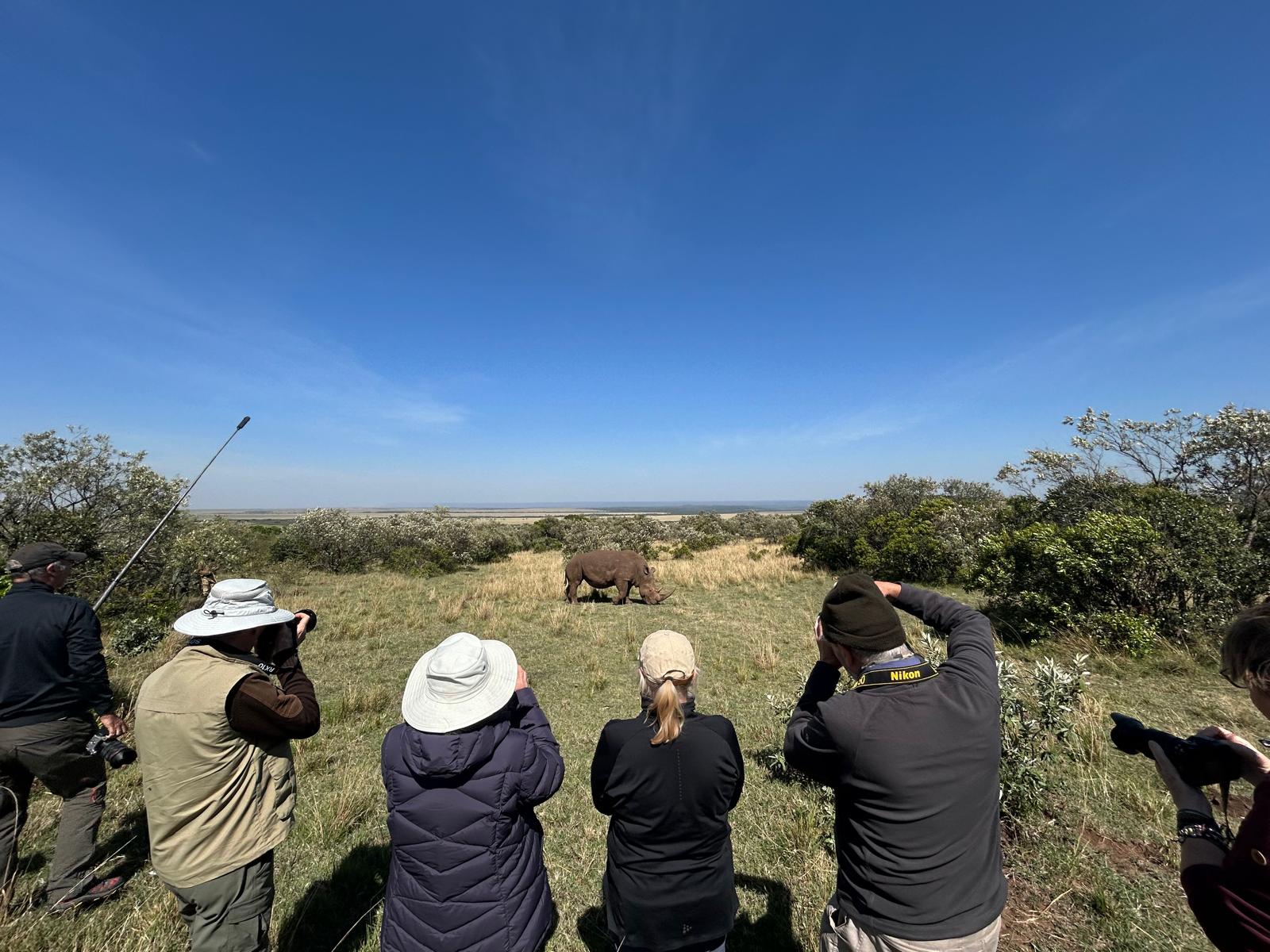
When to go
Walking safaris at Mattikoko generally go out in the morning, when the light is cool and the bush is at its most active. This is when animals move, when birds are loudest, and when the temperature is comfortable for walking. In migration season (July–October), the added presence of large herds on the plains makes the surrounding ecosystem particularly rich – predators are ranging widely, and the density of wildlife in Lemek during this period is exceptional.
That said, walking safaris are excellent in every season. The green season (November–April) brings a transformed landscape, as the grasslands recover, migratory birds arrive, and the bush has a different quality that rewards the slower pace of a walk in its own way.
Combining walking and game drives
Most guests at Mattikoko do both, and the combination is particularly rewarding. A game drive gives you range, as it allows you to cover ground and follow the movement of large animals. A walking safari gives you depth and allows you to stop, looking closely, and understand the layers of the ecosystem that a moving vehicle can only skim.
Many guests find that a walking safari on their second or third morning, after the game drives have given them familiarity with the landscape, produces the most memorable moments of their stay. By that point, they know the terrain well enough to appreciate what they’re being shown on foot.
Ready to walk the Mara?
Walking safaris are included for all guests staying at Mattikoko. If you have specific interests (like tracking, birdwatching, botany, or photography), let us know when you book and we’ll tailor the experience accordingly.