
Beyond the Big Five: The Mara’s remarkable birdlife
Text by Carlee Simpson, images by Tay Belcher, Kaleel Zibe, and Alan Hewitt
While imagining a safari, the typical expectation is to see large game like lions, cheetahs, elephants, giraffes, or perhaps even hippos. Although seeing those large mammals is undoubtedly a highlight of your game drives in the Maasai Mara region, there is another group of species that deserves much attention — its diverse birdlife. Birds have a way of surprising you with their presence almost anywhere you go, and some of the most unexpected and memorable sightings on a Lemek safari are the remarkable birds you encounter along the way.
With roughly 500 species recorded, the Maasai Mara is a must-visit destination for birdwatchers. From Mattikoko, set in the heart of Lemek Conservancy, you have an excellent base for spotting the wealth of birds the Greater Maasai Mara ecosystem has to offer.
Why Lemek Conservancy Is a Birdwatcher’s Paradise
Birdwatching in Lemek Conservancy rewards visitors year-round. With consistent temperatures and a rich mix of habitats — open grasslands, riverine forests, and wetlands — Lemek supports an impressive diversity of resident species while also attracting seasonal migrants. Whether large and distinct, tiny and elusive, or known for their calls, each species occupies its own ecological niche and preferred habitat. The birds of Lemek can generally be grouped into five categories: birds of prey, ground-dwelling, wetland, colourful and perching, and migratory.
Insights From an Expert Guide
Born and raised in this part of the Maasai Mara, Titimet Nampaso, Mattikoko’s owner and a KPSGA Gold-certified guide, has spent his life observing and learning about the wildlife around him. He brings extensive knowledge of wildlife, conservation, and safari guiding, and considers himself an enthusiastic birder. With Titimet and other highly qualified guides at Mattikoko, visitors can rely on deep local expertise to help locate and identify the birds of the Maasai Mara.
When it comes to birdwatching, Titimet’s number one tip is simple: “listen before you see, and approach slowly and quietly.” While birding can be enjoyed year-round in Lemek Conservancy, he recommends coming between November and April, when fewer vehicles are present and migratory birds arrive due to an increase in food availability. “Birding can be more enjoyable than wildlife sometimes, especially when game is hard to find. It is a very special skill to be able to know and follow their behavior.”
After years of guiding and bird spotting, Titimet’s favourite bird is the narina trogon. He describes it as “elusive and not easy to see — like a leopard”, making a sighting truly rewarding. The rarest he has encountered is the verreaux’s eagle-owl, a nocturnal bird — a reminder that there is a whole other world to discover after dark on safari.

Birds to See in Lemek
Birds of Prey
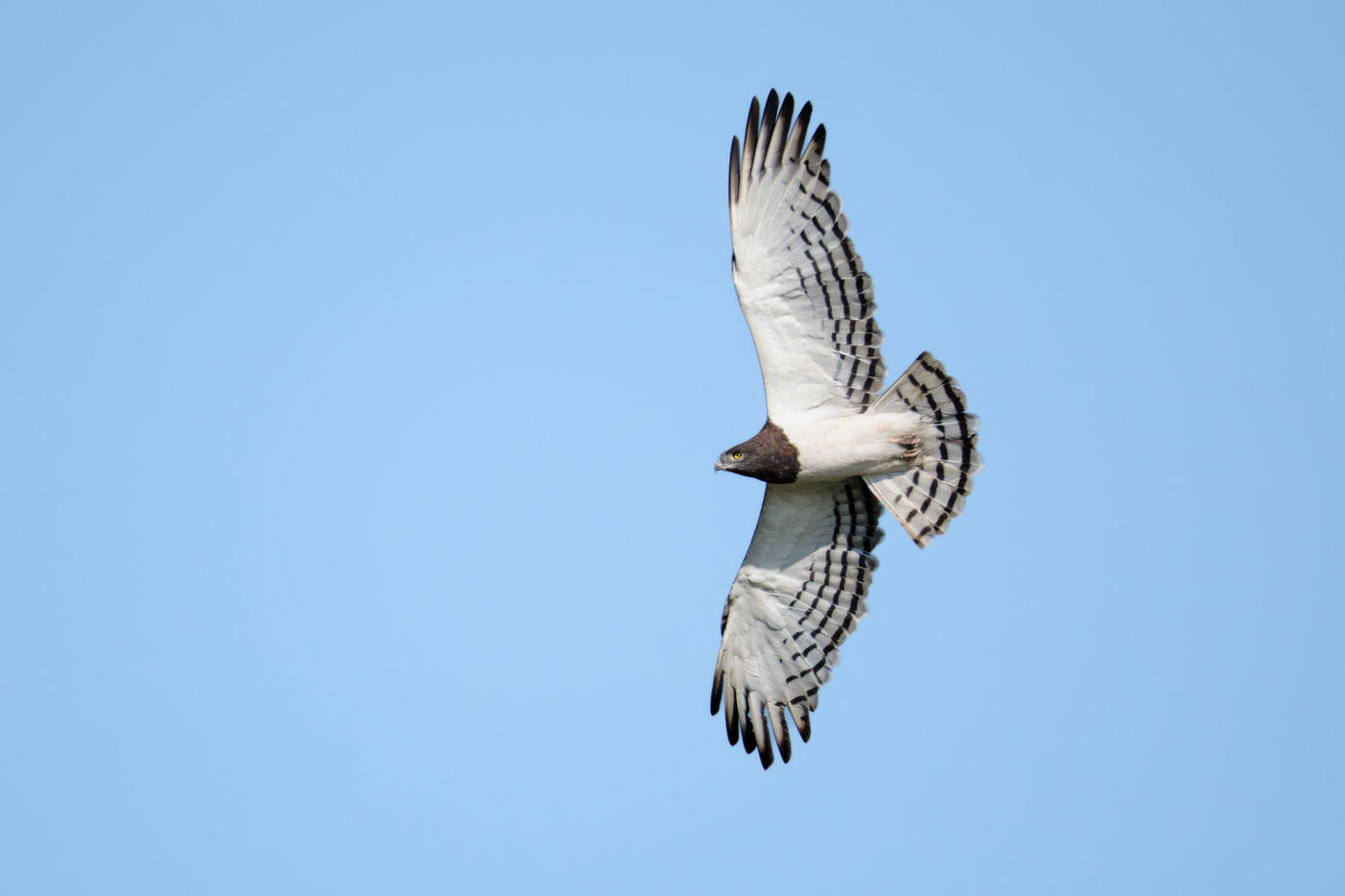
Birds of prey — raptors — are some of the larger birds to spot. With a carnivorous diet, these birds can be found perched in trees, scanning the ground from the air, or, in the case of vultures, hovering over carcasses.
Many raptors, such as secretarybirds or martial eagles, are solitary hunters outside breeding season, relying on powerful talons, sharp eyesight, and specialised beaks to capture prey. One of Titimet’s most memorable bird sightings was watching a martial eagle battle a black mamba. “It took a while,” he recalls, “but eventually the martial eagle managed to get it as its food for the day.” In contrast, vultures such as the white-backed vulture travel in groups known as a kettle — flying together allows them to watch for new food opportunities, which supports the species’ overall success.
Ground-dwelling Birds
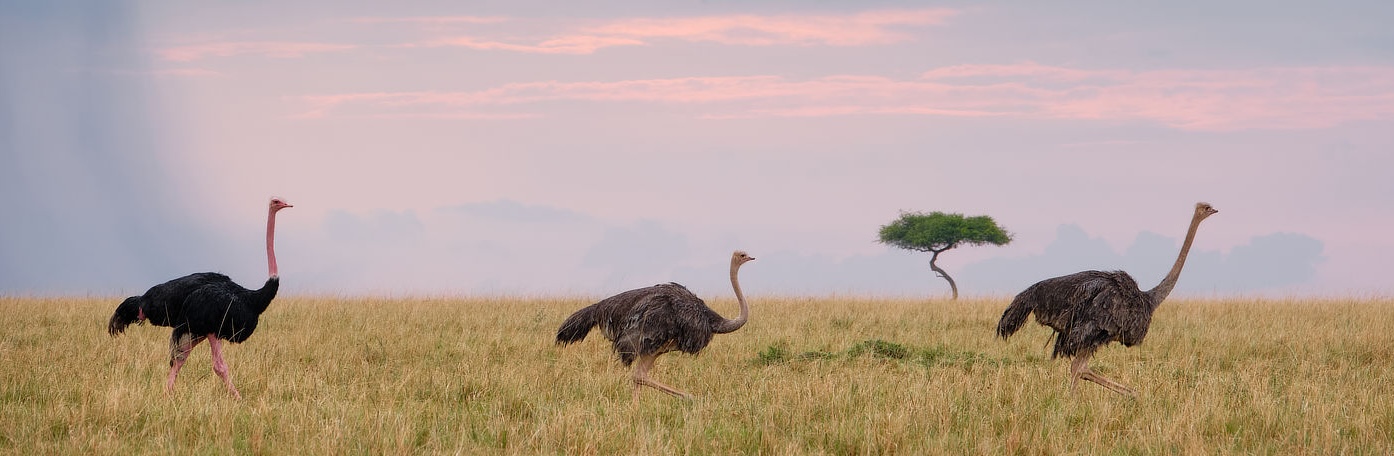
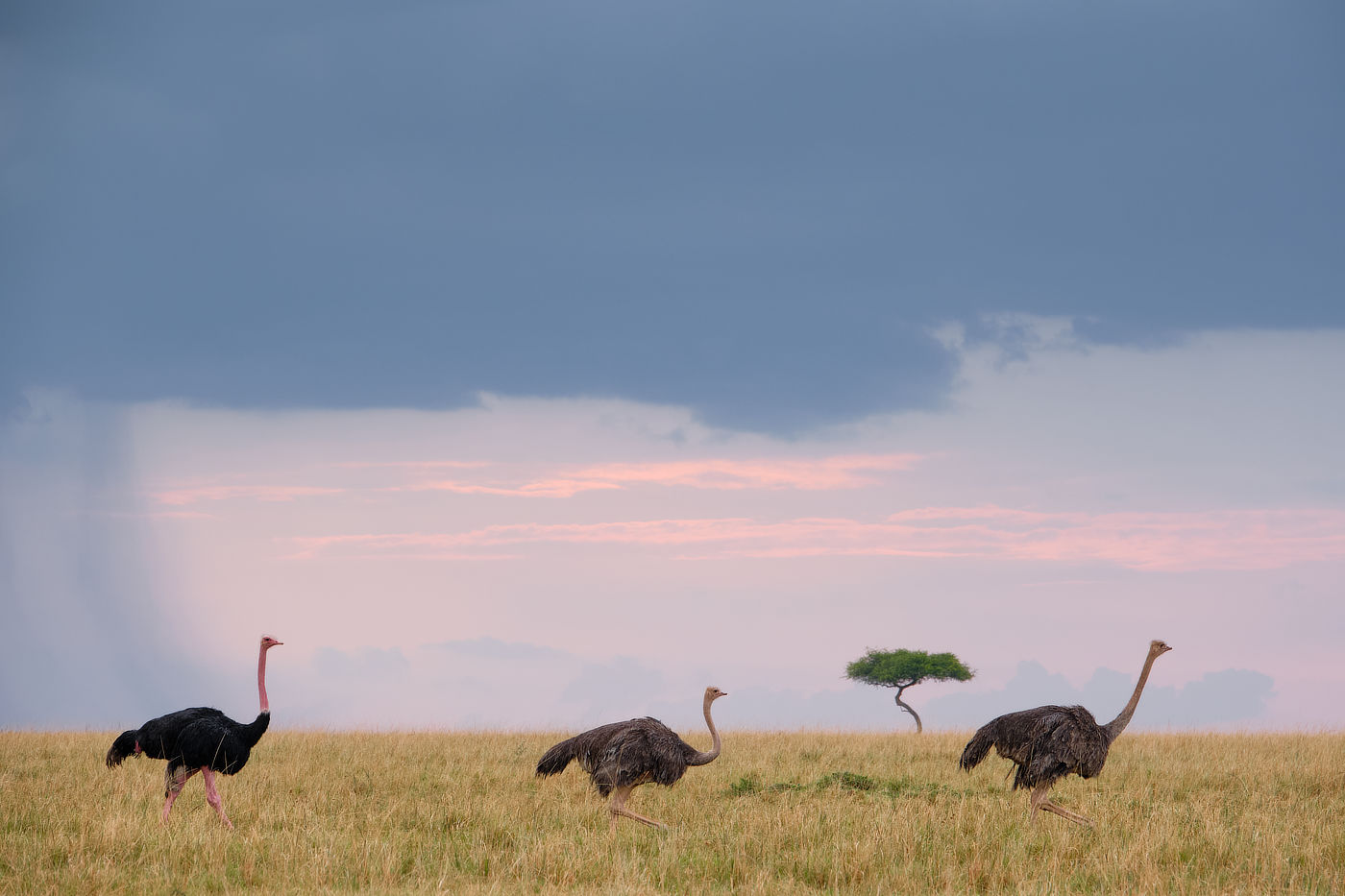
Birds in this category prefer to remain on the ground rather than in the sky. When asked what the top bird visitors hope to see is, Titimet quickly responded: “an ostrich” — the world’s largest bird. There are, however, many other species within this group that may be smaller but are no less intriguing, such as the southern ground hornbill, kori bustard, and helmeted guineafowl. All three are capable of flight, with the kori bustard being the world’s heaviest flying bird. The ostrich, by contrast, is flightless and relies on its powerful legs for survival.
Wetland Birds
Wetlands are biodiverse hotspots, home to the insects, invertebrates, and amphibians that birds in this category typically feed on. Some species are very large, like the goliath heron; others, like the Egyptian goose, enjoy swimming. The African jacana can walk on floating vegetation thanks to its long, spread-out toes. And the hadada ibis — often heard before it is seen — takes its name directly from the sound it makes: ha-da-da.
Colourful and Perching Birds
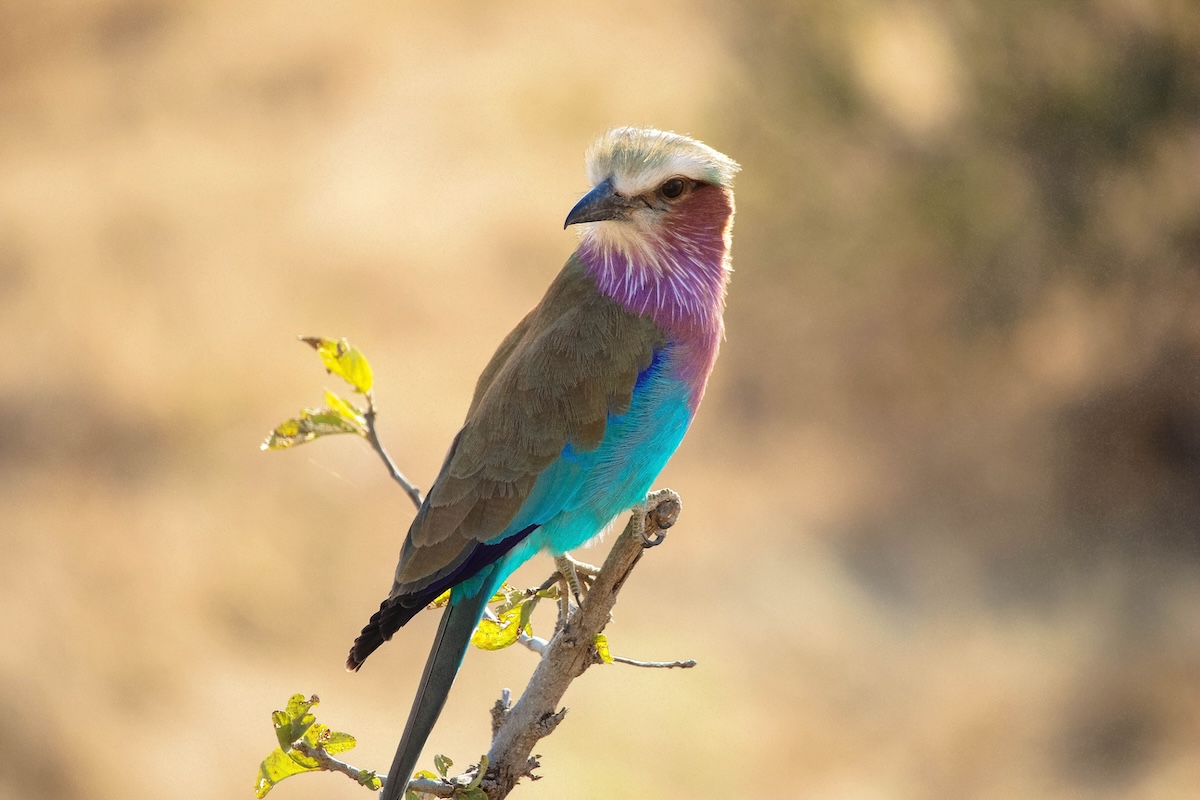
Among the most charismatic birds in Lemek are the lilac-breasted roller and the superb starling — both frequently spotted perching on trees, shrubs, and posts. Lilac-breasted rollers are turquoise, purple, and blue; superb starlings are orange and iridescently blue-purple. Both use their colouring for mate selection and species recognition. Widespread and relatively easy to spot, they are a reliable highlight on any game drive or walking safari in Lemek.
Migratory Birds
Depending on the time of year, Intra-African and Palearctic migrants also pass through Lemek Conservancy. Potential sightings include the abdim’s stork, steppe eagle, willow warbler, and spotted flycatcher. These species typically prefer wet or short dry seasons, making sightings less common between June and October.
Before You Go
Spotting a new bird species carries its own particular satisfaction — a moving target that makes every sighting feel earned. A good pair of binoculars is essential, and keeping a record of species spotted adds another layer of engagement to the experience. At Mattikoko, experienced guides and an uncrowded conservancy make it an ideal setting for first-time birders and seasoned twitchers alike. Walking safaris are a particularly great way to spot a wealth of birds.
Birds of Lemek Conservancy: A Complete Species List
| Common Name | Scientific Name | Category | Habitat in Lemek |
|---|---|---|---|
| Secretarybird | Sagittarius serpentarius | Bird of Prey | Open grasslands |
| Martial Eagle | Polemaetus bellicosus | Bird of Prey | Woodland, open plains |
| White-backed Vulture | Gyps africanus | Bird of Prey | Open savanna |
| Ostrich | Struthio camelus | Ground-dwelling | Open grasslands |
| Southern Ground Hornbill | Bucorvus leadbeateri | Ground-dwelling | Woodland, grassland |
| Kori Bustard | Ardeotis kori | Ground-dwelling | Open grasslands |
| Helmeted Guineafowl | Numida meleagris | Ground-dwelling | Grassland, bush |
| Goliath Heron | Ardea goliath | Wetland | Rivers, wetlands |
| Egyptian Goose | Alopochen aegyptiaca | Wetland | Wetlands, rivers |
| African Jacana | Actophilornis africanus | Wetland | Floating vegetation, wetlands |
| Hadada Ibis | Bostrychia hagedash | Wetland | Wetlands, grassland |
| Lilac-breasted Roller | Coracias caudatus | Colourful/Perching | Open woodland, savanna |
| Superb Starling | Lamprotornis superbus | Colourful/Perching | Acacia woodland, camp areas |
| Abdim’s Stork | Ciconia abdimii | Migratory | Open grasslands |
| Steppe Eagle | Aquila nipalensis | Migratory | Open plains |
| Willow Warbler | Phylloscopus trochilus | Migratory | Woodland, bush |
| Spotted Flycatcher | Muscicapa striata | Migratory | Woodland edges |
| Narina Trogon | Apaloderma narina | Special/Elusive | Riverine forest |
| Verreaux’s Eagle-Owl | Bubo lacteus | Nocturnal | Woodland, riverine forest |