
Two very different journeys, and how to choose between them
Getting to the Maasai Mara is part of the experience. Whether you arrive by light aircraft over the open plains or by road through the Rift Valley, the journey sets the tone for what follows. Both options are genuinely worth considering, and the right choice depends on your priorities, your budget, and what kind of traveller you are.
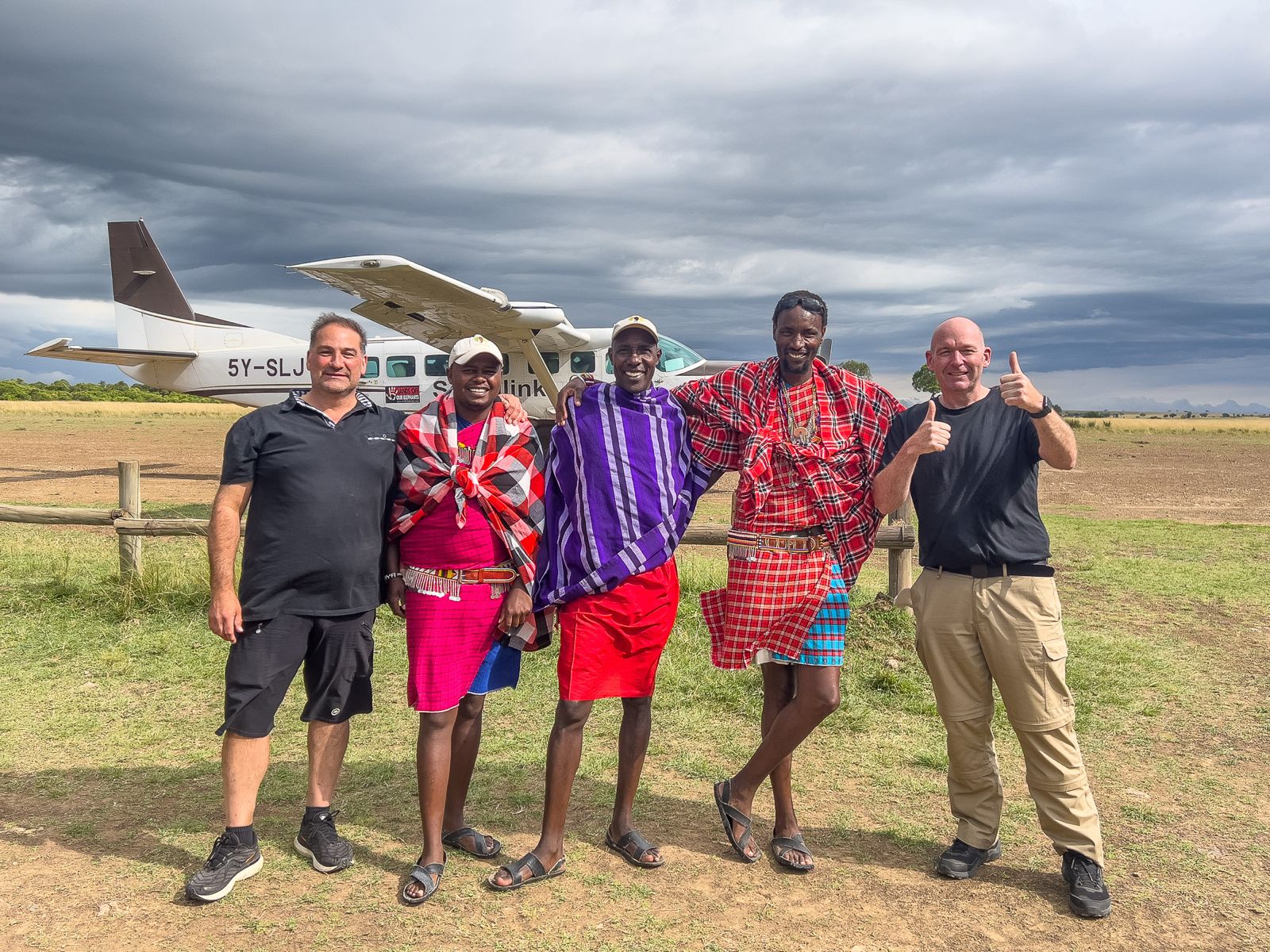
Image by Alan Hewitt & Tay Belcher
Flying: the faster, more expensive option
Most flights to the Mara depart from Wilson Airport in Nairobi, a small domestic hub about 30 minutes from the city centre. The flight itself takes roughly 45 minutes to an hour, depending on which airstrip you’re heading to, and the approach alone is worth the cost — a bird’s eye view of the ecosystem that gives you an immediate sense of its scale.
For Lemek Conservancy, the nearest airstrip is Mara North. Scheduled daily services operate with AirKenya and Safarilink, and the Mattikoko team will collect you directly from the airstrip. From wheels down to camp, it’s a short transfer.
The main consideration is cost. A one-way flight typically runs between $150 and $250 per person, depending on the operator and season. For two people on a four-night stay, that’s a meaningful addition to the budget. But it’s also the most time-efficient option, which matters if your trip is short or if you’re combining the Mara with other destinations.
Driving: longer, cheaper, and scenic
The road journey from Nairobi to Lemek takes roughly five to six hours in good conditions, heading southwest through the Rift Valley and eventually onto the dirt roads that lead into the conservancy. It’s a long day, particularly at the end of a long-haul flight, but it has real advantages.
The drive through the Rift Valley is spectacular. You’ll pass through small towns, see the landscape shift from highland to savannah, and arrive at the Mara having watched the ecosystem build around you rather than appearing suddenly from the air. For some travellers, that gradual arrival is exactly right.
Driving also makes sense if you’re planning to stop along the way. Lake Naivasha, Lake Nakuru, or the Rift Valley viewpoints are all natural breaks, and building a night or two into the journey gives you more of Kenya rather than less. If you’re travelling with children, a road trip can work well with the right planning.
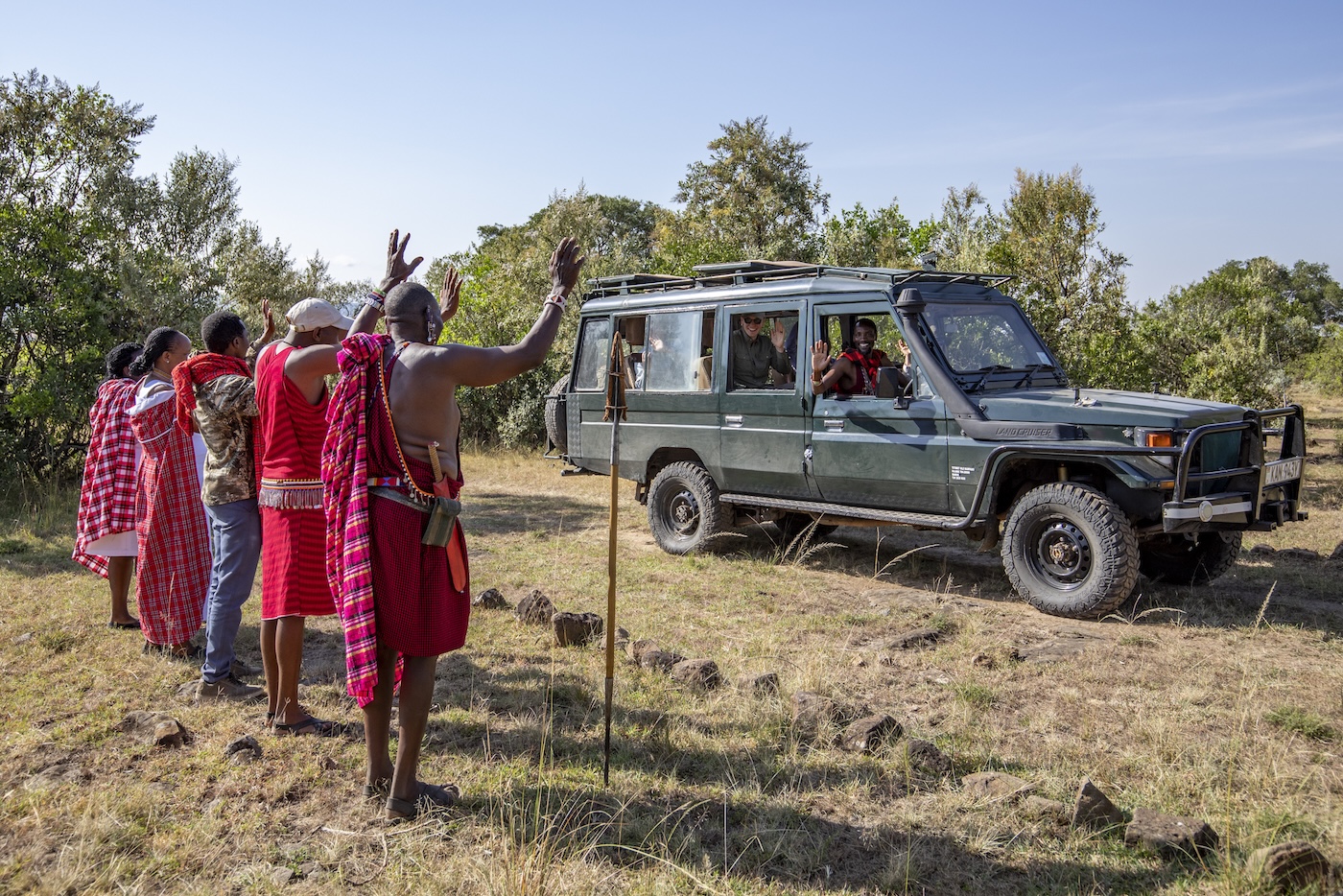
For the drive to work comfortably, you’ll need a reliable 4×4 and an experienced driver. The final stretch into Lemek involves unpaved roads that can be challenging after rain. If you’re arranging your own transport, make sure the vehicle and driver are both up to it. Mattikoko can point you in the right direction.
Which is right for you?
Fly if: your time is limited, you’re travelling with young children, you want the most seamless arrival, or you’re combining the Mara with another destination that doesn’t connect easily by road.
Drive if: you have more time, you’re travelling on a tighter budget, you want to see more of Kenya along the way, or you simply enjoy a road trip.
One practical note: many travellers fly in and drive out, or vice versa. It’s a good way to see the journey from both directions, and it means you’re not retracing your route. If you’re adding a stop in Naivasha or the Rift Valley, this kind of one-way arrangement works particularly well.
A note on the journey from outside Nairobi
If you’re arriving into Jomo Kenyatta International Airport rather than flying domestically, allow time to transfer to Wilson Airport for onward flights. The two airports are on opposite sides of the city, and Nairobi traffic can be unpredictable. Most travellers either spend a night in Nairobi to break the journey, or plan for an early arrival with a same-day connection.
Further reading: